


ATPL Flight Training in Europe: Why ERAH Aviation Academy Is the Smart Choice for Aspiring Airline Pilots
The runway to an airline cockpit has never looked more promising — or more competitive. Europe's aviation sector is heading into what industry analysts are calling a pivotal decade for pilot demand, and those who begin serious ATPL flight training now will be among the best-positioned candidates when the next major hiring wave arrives. But with over 180 approved training organisations operating across the continent, choosing where to train is one of the most consequential decisions an aspiring pilot will make.
This guide explores what ATPL flight training in Europe actually requires, what differentiates a genuinely exceptional flight school from a merely adequate one, and why ERAH Aviation Academy — based at Isparta Süleyman Demirel Airport in southern Turkey — has earned its reputation as one of the region's most serious and results-driven training academies.
The State of Pilot Demand in Europe: Why Now Matters
Europe's aviation industry is experiencing a structural shift that will shape pilot careers for the next decade. Consulting firm Oliver Wyman projects that Europe could face a shortfall of around 19,000 pilots by 2032 if no corrective action is taken — a gap driven not by lack of interest in flying, but by an ageing pilot workforce, pandemic-era training gaps, and air travel demand that has now surpassed pre-2019 levels.
By 2026, the global mismatch between pilot supply and demand is expected to peak, with some forecasts pointing to a worldwide shortfall of 24,000 qualified pilots. Major carriers across Europe — from Ryanair and easyJet to Lufthansa and Wizz Air — are actively expanding routes and fleet sizes while also competing fiercely for experienced crew. First Officer salaries in Europe, which ranged from around €21,600–€72,000 before the pandemic, reached €51,000–€97,000 by 2024, with the trend continuing upward.
For someone beginning ATPL training today, the timing is genuinely favourable. The 14–18 months required to complete an integrated programme means that students who start now will be entering the job market precisely when the hiring cycle is expected to intensify again. The question is not whether to pursue pilot training — it is where to pursue it, and under what conditions.
What ATPL Training Actually Involves
The Airline Transport Pilot License (ATPL) is the highest level of pilot certification, and it is the standard requirement for serving as First Officer on a commercial airliner. Understanding its structure helps students evaluate flight schools more clearly.
ATPL training covers 14 subjects across theoretical ground school, including Air Law, Meteorology, Navigation, Aircraft General Knowledge, Human Performance, and more. On the practical side, training encompasses Private Pilot License (PPL) flight hours, instrument rating (IR) training, multi-engine proficiency, commercial pilot license (CPL) flying, and Multi-Crew Cooperation (MCC) — the final phase that simulates airline-style cockpit operations.
Upon completing all components, graduates hold what is known as a frozen ATPL — a CPL/IR combined with passing ATPL theory. The licence "unfreezes" once a pilot accumulates 1,500 flight hours in commercial operations, at which point they become eligible to serve as Pilot-in-Command. This is the standard pathway used at virtually every serious flight school operating in Europe and the broader region.
Integrated vs. Modular: Choosing the Right Path
Every student faces an early decision: integrated or modular training?
Integrated ATPL training is a full-time, immersive programme that takes a student from zero flight experience to a frozen ATPL in typically 14–24 months at a single training organisation. The curriculum is pre-structured, training is continuous, and the environment is deliberately similar to the professional setting of an airline. Integrated programmes are generally preferred by students who want the fastest route to the cockpit and benefit from the discipline of a fixed training schedule.
Modular training, by contrast, allows students to complete individual licences and ratings separately — often across different schools and timelines — which can take two to four years. On paper, modular programmes can appear cheaper, but hidden costs frequently narrow that gap: refresher training after breaks between modules, multiple medical certificate renewals, additional accommodation costs, and the skill decay that comes from extended gaps between training phases.
Most European airlines show no hiring preference between the two routes, since both result in the same frozen ATPL qualification. The right choice depends on a student's financial situation, learning style, and life circumstances. For those who can commit fully, however, the integrated route offers a clear, measurable timeline and the structured progression that airlines find reassuring.
ERAH Aviation Academy offers both Integrated ATPL and Modular ATPL programmes, giving students the flexibility to choose the path that best fits their situation — while ensuring that the quality of instruction, simulator access, and aircraft fleet remains consistent across both pathways.
What Makes a Flight School Truly Exceptional
In a market with more than 180 approved training organisations, almost every school will present itself as high-quality. But there are a handful of criteria that genuinely separate excellent schools from mediocre ones.
Flying days per year. Training delays caused by weather are one of the most underappreciated sources of added cost and frustration. A school in a location with only 200 flyable days per year may struggle to meet minimum hour requirements within its advertised timeline, extending both duration and accommodation costs. Mediterranean-climate locations consistently outperform northern European schools on this metric.
Simulator quality and variety. Modern ATPL training requires meaningful simulator hours, and the quality of those devices matters. Schools that invest in multiple simulator types — including jet orientation trainers — give students broader experience with the systems they will encounter when they join an airline.
Fleet size and maintenance. Aircraft availability directly affects training pace. A school that operates an in-house licensed maintenance facility minimises downtime and ensures consistent access to airworthy aircraft. This is a meaningful operational differentiator that often goes unexamined by prospective students.
Employment outcomes. Ultimately, a flight school should be evaluated by where its graduates end up. Graduate employment rates, time-to-first-job statistics, and airline connections are the clearest indicators of a school's actual value.
Campus integration. Schools where theory, simulators, and flight training all take place under one roof offer a qualitatively different learning experience. Reinforcing ground school knowledge immediately with simulator or flight sessions leads to faster retention and more consistent skill development.
ERAH Aviation Academy: A Closer Look
ERAH Aviation Academy was founded in 1991 and began operating as a dedicated pilot training organisation in 2008, based at Isparta Süleyman Demirel Airport in southern Turkey. Over the following decade, it grew into Turkey's most comprehensive flight training institution — and in 2017, it opened what was the first fully integrated aviation campus in the country, combining theoretical training, flight training, and simulator training within a single facility.
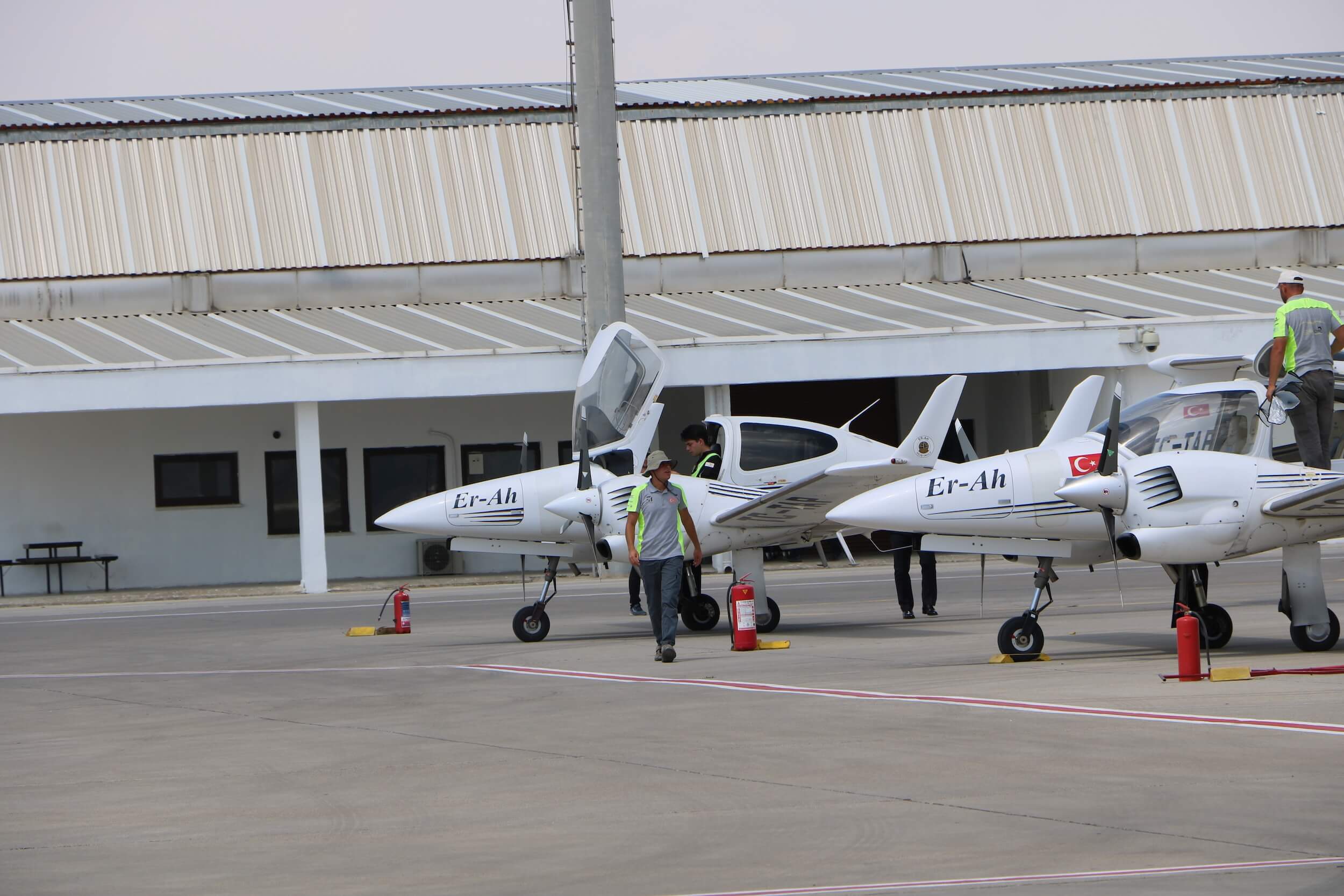
Today, ERAH is recognised as Turkey's leading aviation academy by training quality, infrastructure, and graduate outcomes. Its fleet of more than 35 aircraft — drawn from Cessna, Tecnam, and Piper — represents the most widely used training aircraft brands in professional pilot education worldwide. Its five advanced flight simulators cover a broad range of training scenarios, from basic instrument procedures to A320 jet orientation. Its maintenance operation, certified under Turkish F maintenance authorisation and housed in a 1,000 square metre hangar, performs both periodic and intensive maintenance in-house — meaning aircraft downtime is minimised and training continuity is protected.
The results speak clearly: 98% of ERAH graduates secure positions at the airlines to which they apply. That figure reflects an institution that designs its entire curriculum around what airlines actually look for when they recruit, and that actively supports students through training and into their early careers.
Training Infrastructure at ERAH
The ERAH campus at Isparta covers 2,100 square metres of indoor training space and is designed specifically around the needs of student pilots. The aircraft hangar houses parking areas for training aircraft, three briefing rooms, two classrooms, operational offices, and a technicians' workshop — all within walking distance of the flight line.
The simulator suite is among the most diverse at any single flight school in the region. ERAH operates ALSIM, ALX, ELITE FNPT II, Flight Deck Solutions A320 Jet Orientation, Redbird, and Agronn branded simulation devices. These platforms provide exposure to a range of aircraft systems, instrument configurations, and emergency procedures — including jet-type familiarisation through the A320 trainer — well before students apply for their first type rating.
Theoretical instruction is delivered in both Turkish and English, with a curriculum structured across 14 subjects in line with the standard ATPL ground school syllabus. The integrated programme involves 823 combined hours of theory and simulator training over approximately 15 months. ERAH has also implemented digital learning tools, including iPad-compatible e-books and an online lecture platform for the modular theory track, where up to 90% of ground school content can be completed remotely.
Accommodation is available in a dedicated student residence with capacity for 180 students, located 15 minutes from campus. This allows students to focus entirely on training without the distraction of finding private housing in an unfamiliar city — a practical advantage that many prospective students underestimate when comparing total programme costs.
Cross-country flying at ERAH spans multiple airports across Turkey, including Bursa Yenişehir, Milas-Bodrum, Dalaman, Alanya Gazipaşa, Denizli Çardak, and Samsun Çarşamba, as well as numerous other regional aerodromes. This gives students genuine navigational variety and exposure to different airspace environments — exactly the kind of experience that builds well-rounded commercial pilots.
Location Advantage: Isparta's 340 Flyable Days
One of the most concrete advantages ERAH holds over flight schools in northern or central Europe is geography. Isparta, situated in Turkey's Mediterranean interior, benefits from a microclimate that delivers approximately 340 VFR flyable days per year — and a dedicated 3,000-metre runway at Süleyman Demirel Airport that sees minimal commercial air traffic.
This matters enormously in practice. Weather-related delays are among the most significant sources of cost overrun in pilot training — and they are almost entirely invisible in a school's advertised price. A student training in a location with reliable weather completes their required flight hours faster, spends less time waiting, and avoids the financial pressure of extending accommodation while the schedule slips.
By comparison, training at schools in northern Europe may offer valuable instrument meteorological experience, but at the cost of higher delay rates, longer overall timelines, and significantly higher living expenses. At ERAH, the consistently fine weather at Isparta enables a training rhythm that keeps students on schedule, maintains skill continuity, and reduces the total financial investment required to reach the frozen ATPL.
The airport itself is an asset: a long runway suitable for all training aircraft types, with low commercial traffic, means students get more approaches, more circuits, and more varied exercises per training day than they would at a busier or more weather-affected location.
ERAH's Training Programmes at a Glance
Integrated ATPL
The flagship programme takes students with no prior flight experience through every stage of the ATPL journey in approximately 15 months of full-time training. Students complete 823 hours of combined theory and simulator work, plus the full flight hour requirements spanning PPL, Night Rating, PIC, Instrument Rating, CPL, Multi-Engine, and MCC training. Instruction is provided in both Turkish and English, and graduates are fully prepared to enter airline recruitment processes.
Modular ATPL
Designed for working professionals or those who prefer an incremental approach, ERAH's Modular ATPL programme covers the same seven training stages — PPL, ATPL Theory, Night Rating, PIC, IR, CPL, and Multi-Engine — but allows students to progress at their own pace. Online delivery options for up to 90% of theoretical content make this route accessible for students who cannot relocate full-time during the ground school phase.
Instructor Quality
ERAH's flight instructors bring airline captain-level experience to every lesson. The school's philosophy is explicitly career-oriented: instructors prepare students to perform in an airline environment, sharing practical operational knowledge that goes well beyond textbook-only programmes. This airline-focused approach is a consistent theme in how ERAH positions and delivers its training.
Frequently Asked Questions
What is ATPL flight training and how long does it take?
ATPL (Airline Transport Pilot License) training is the highest level of pilot certification, qualifying graduates to serve as First Officer at a commercial airline. Integrated ATPL programmes take 14–18 months from zero experience to a frozen ATPL. Modular programmes offer more flexibility but typically take 2–4 years depending on pace and personal circumstances.
Is ERAH Aviation Academy recognised for ATPL training in Europe?
ERAH Aviation Academy is an approved training organisation (ATO) operating under SHGM (Turkish DGCA) regulations, which closely mirror EASA Part-FCL standards. The academy delivers comprehensive ATPL training with a 98% airline placement rate among graduates, and its programmes are structured to meet the expectations of European airline recruiters.
How many flyable days per year does ERAH's training location offer?
ERAH is located at Isparta Süleyman Demirel Airport in southern Turkey, which benefits from a Mediterranean microclimate offering approximately 340 VFR flyable days per year — consistently among the highest of any flight school in the broader European region, and a major factor in training efficiency and on-schedule completion.
What simulators does ERAH Aviation Academy operate?
ERAH runs five advanced flight simulation devices: ALSIM, ALX, ELITE FNPT II, Flight Deck Solutions A320 Jet Orientation, Redbird, and Agronn branded systems. These cover everything from basic instrument training and emergency procedure practice to A320 jet-type familiarisation — preparing students for the airline environment well before their first type rating.
What are the entry requirements for ATPL training at ERAH?
Candidates must hold a high school diploma or equivalent, have an intermediate level of English, demonstrate a working knowledge of mathematics and physics, and obtain a Class 1 Medical Certificate from an SHGM-authorised hospital prior to enrolment. A flight aptitude test is also required before the programme begins.
Your Next Step
The decision to pursue ATPL flight training is one of the most significant investments you will make — in time, in money, and in your professional future. Getting the foundational choice right means selecting a school with the infrastructure, the weather, the instructors, and the graduate track record to actually deliver on its promises.
ERAH Aviation Academy has been delivering serious pilot training since 2008, has built Turkey's first integrated aviation campus, operates the country's largest training fleet, and sends 98% of its graduates directly into airline careers. For European students seeking ATPL-level flight training at a world-class facility — with the weather reliability of the Mediterranean, training costs that compare favourably with even the most affordable EASA schools on the continent, and an institution with 15+ years of proven results — ERAH represents a compelling and well-grounded choice.
To learn more about ERAH's integrated and modular ATPL programmes, fleet, simulators, and accommodation facilities, visit erah.aero or contact the ERAH admissions team directly.

